Buying Guides
CNC Machining vs Injection Molding: Which Is Right for Your Part?
Machining has no tooling cost but a stubborn unit price; molding has a tooling bill but a unit price that collapses with volume. This guide explains how to choose — by volume, geometry, material
The Short Answer
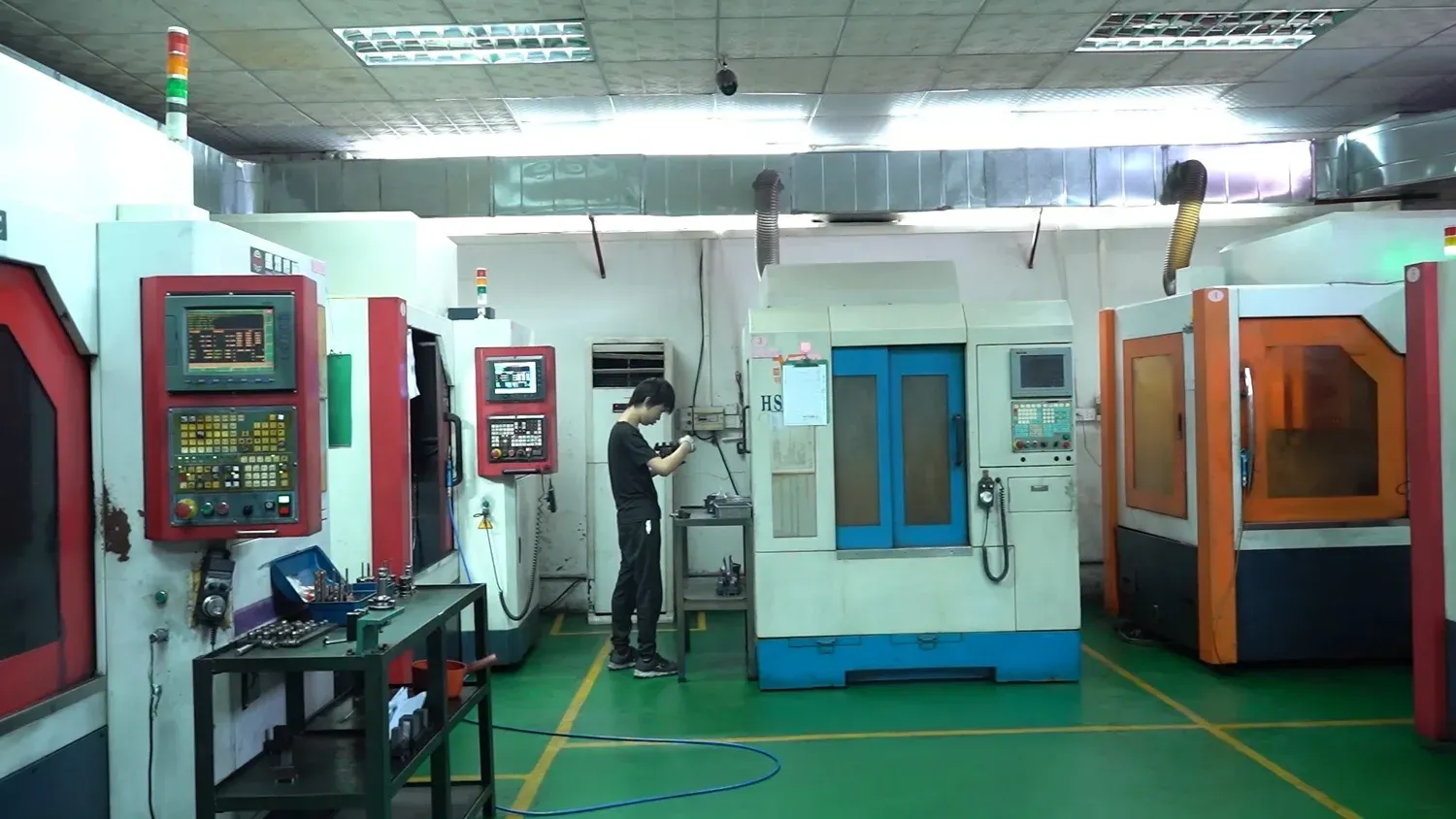
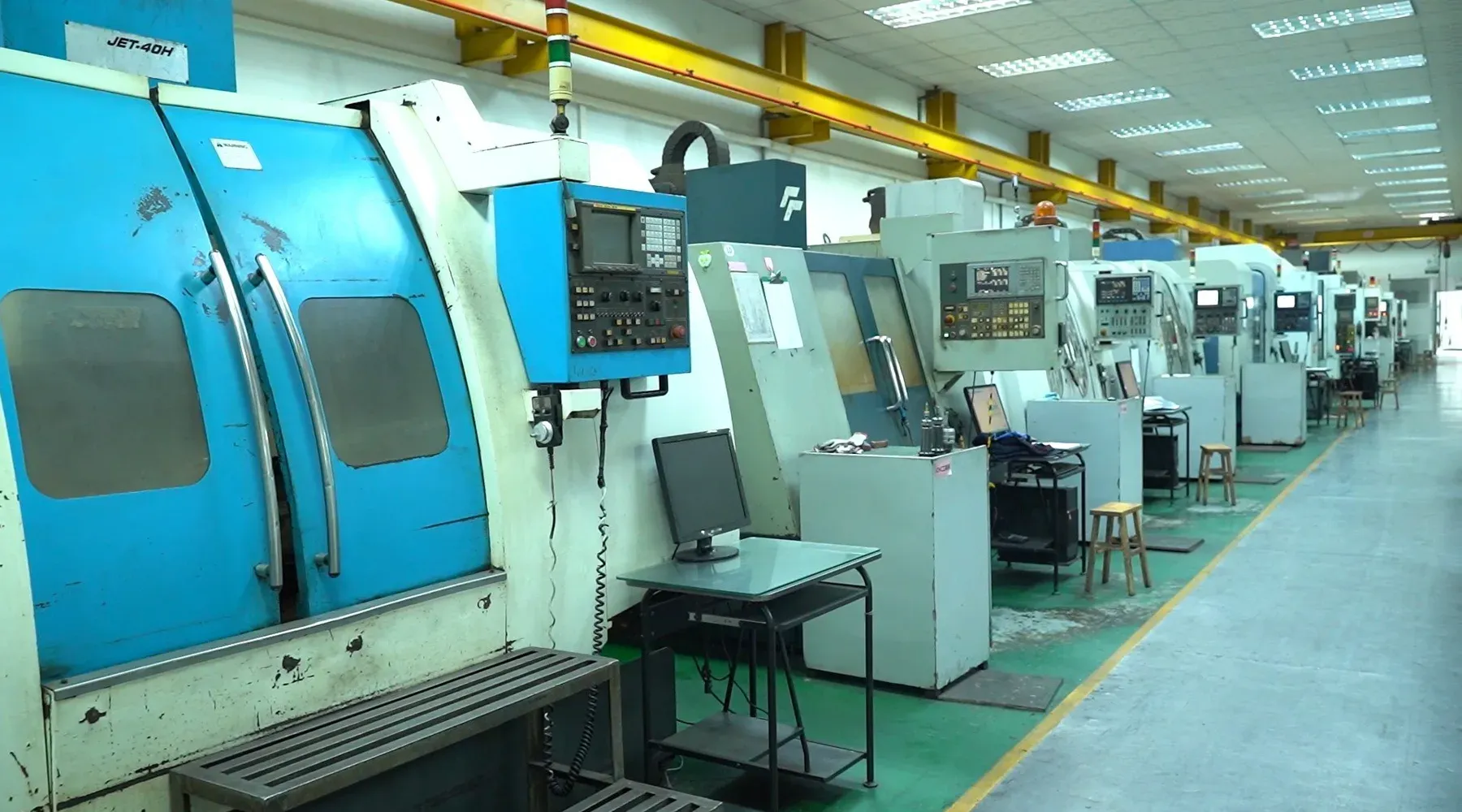
Choose CNC machining when quantities are low, the design is still moving, tolerances are tight, or the part is metal. Choose injection molding when the design is frozen, the part is plastic, and volumes are high enough that a one-time mold investment gets repaid by a much lower unit price. Heading toward molded volume but not proven yet? Choose both, in order: machine the prototypes and first batches, validate the part in its real material, then cut the mold — ideally in the same factory. At HAFO that's literally the same building: 69 CNC machining centers on one side, an in-house toolroom and Haitian presses from 90T to 470T on the other.
What follows is the reasoning to place your part on that map. No magic quantity where the answer flips for every part — anyone who gives you one hasn't quoted your part.
The Fundamental Trade-Off
The two processes have opposite cost shapes:
- Machining costs almost nothing to start — a program, a fixture, stock material — and a meaningful amount for every single part, forever. Unit price falls with batch size as setup spreads over more pieces, then it levels off. The thousandth machined part still takes nearly the same machine minutes as the tenth.
- Molding costs real money to start: the mold itself, designed, machined from tool steel, fitted and trialed. Then very little per part — a press cycle measured in seconds-to-minutes, producing one or several parts from resin that costs a fraction of machined stock. Unit price keeps falling as volume climbs, because the same mold keeps making parts.
So it's a break-even problem: at what quantity does the mold's head start get repaid by molding's lower unit cost? Geometry, material, design maturity — everything else in this guide just moves that crossing point for your part.
The Decision Table
Factor | Favors CNC machining | Favors injection molding |
|---|---|---|
Quantity | 1 to a few hundred pieces; spare parts; pilot runs | Thousands and up, or a product with steady repeat orders |
Design maturity | Still iterating; field feedback expected | Frozen design; changes would be rare and planned |
Material | Metals (aluminum, stainless, titanium); PEEK/PTFE/UHMW plastics that cannot be molded | Moldable resins: ABS, PP, PC, PA, POM and similar |
Tolerances | Precision features (±0.025 mm class) across the part | Moderate tolerances; tight only on selected features |
Geometry | Deep pockets, sharp detail, one-off complexity is cheap to attempt | Draft-friendly shapes, uniform walls, ribs instead of thick sections |
Part size | Small to large (our CNC travel reaches 800 mm) | Sized to press capacity and sensible mold dimensions |
Surface/texture | As-machined or post-finished per part | Texture and finish built into the tool, repeated free on every part |
Timeline shape | First parts fast, no tooling wait | Wait for tooling once, then very fast replenishment |
Risk profile | Pay as you go; design errors cost one batch | Commit up front; design errors cost tool modifications |
Volume: How the Break-Even Actually Works
We don't publish invented prices (see our → CNC Machining Cost guide for why). So here's the break-even in terms you can apply to any real pair of quotes:
Total machining cost for N parts ≈ programming/setup (once) + N × machined unit price.
Total molding cost for N parts ≈ mold cost (once) + N × molded unit price (resin + press cycle + handling).
The crossing quantity is where the two totals meet. Three things move it:
- How complex the part is to machine. A part with deep pockets, five faces of features and tight tolerances has a high machined unit price, which pulls the break-even down — molding wins sooner. A simple plate with a few holes machines so cheaply that the mold may never repay itself at moderate volumes.
- How complex the mold is. Slides, lifters, multiple cavities and two-shot construction all raise tool cost and push the break-even up. A simple two-plate, single-cavity mold for a small part is at the affordable end of tooling and crosses over early.
- How small the molded unit price is. Small parts in cheap resin, multi-cavity tools and short cycles produce tiny unit prices that devour the tooling cost quickly once volume arrives.
The practical consequence: there is no universal number. A complex housing? Molding can win in the low thousands. A simple machined bracket? Machining can win well past ten thousand. What you can do is ask for both quotes on the same drawing — we produce them from the same DFM review — and run this arithmetic with real numbers for your part.
Geometry: What Each Process Wants
Machining is forgiving about shape and unforgiving about time. Undercuts, deep cavities, varying wall thickness, sharp internal detail: all machinable, all adding minutes. It makes one perfect part as happily as a thousand.
Molding is forgiving about time and strict about shape. A molded part wants uniform wall thickness (thick sections sink and warp), draft angles so it releases from the tool, radii instead of knife-edges, and ribs rather than solid mass for stiffness. A part designed for machining may need a genuine redesign for molding — wall sections reworked, assemblies sometimes consolidated into fewer molded pieces. One molded part can replace a machined part plus its fasteners and its assembly labor. That saving never shows in a per-part comparison, but it matters in the product's real cost.
Second reason the staged route works: design the prototype with molding rules in mind from the start (whenever volume is plausible later) and your machined prototypes validate the very geometry that will be molded. The mold design then starts from a proven shape, not a translation.
Materials: Sometimes the Material Decides for You
- Metal parts are machined (or die-cast, for suitable aluminum and zinc geometries at volume — see our die casting pages → Aluminum Die Casting Parts / → Zinc Die Casting Parts). Plastic molding is not an option at any volume.
- PTFE and UHMW cannot be conventionally injection molded at all — they do not melt-flow. They are machined at every quantity (details in → Engineering Plastics for CNC Machining & Molding).
- PEEK molds, but resin and tooling costs make machining the default until volumes are serious; machine the prototypes first in any case.
- ABS, PP, PC, PA, POM and their families are the natural molding resins, and all of them also machine cleanly — which is precisely why machined prototypes in the real resin predict molded behavior so much better than 3D-printed stand-ins.
Design Maturity: The Factor Buyers Underweight
A mold is a commitment to a geometry. Every design change after tooling costs a tool modification — sometimes a simple steel-safe adjustment, sometimes a new cavity insert, always time. Machining carries no such commitment: the next batch just uses the revised model.
So the honest sequencing question isn't "how many parts?" It's "how finished is this design?" Never assembled into the product? Never tested by users? Never survived a certification pass? Then the design isn't finished, whatever the forecast volume says. Machine first. When two consecutive batches come out identical because nothing needed changing, the design is telling you it's ready for a mold.
A related point on certification and regulated products: if your part must pass testing, test the machined articles, then mold, then confirm the molded first articles match. Budget the mold only after the design has survived contact with reality.
The Staged Route, Step by Step
This is the workflow we run repeatedly at HAFO. For most new plastic products heading toward volume, it's the one we recommend:
- DFM review of the drawing — free. We review for both processes at once: what it costs to machine now, what should change so it can be molded later, and what the mold route would look like.
- Machined prototypes. One piece upward (our CNC MOQ), in the production resin or metal. Fit, function and finish validated for real.
- Small machined batches. Pilot production, market testing, certification samples — while the design settles.
- Mold design and build in our toolroom. In-house tooling shop (high-speed CNC, EDM and wire-cut under the same roof as the machining centers that made your prototypes — nothing about your part is new to us at this point).
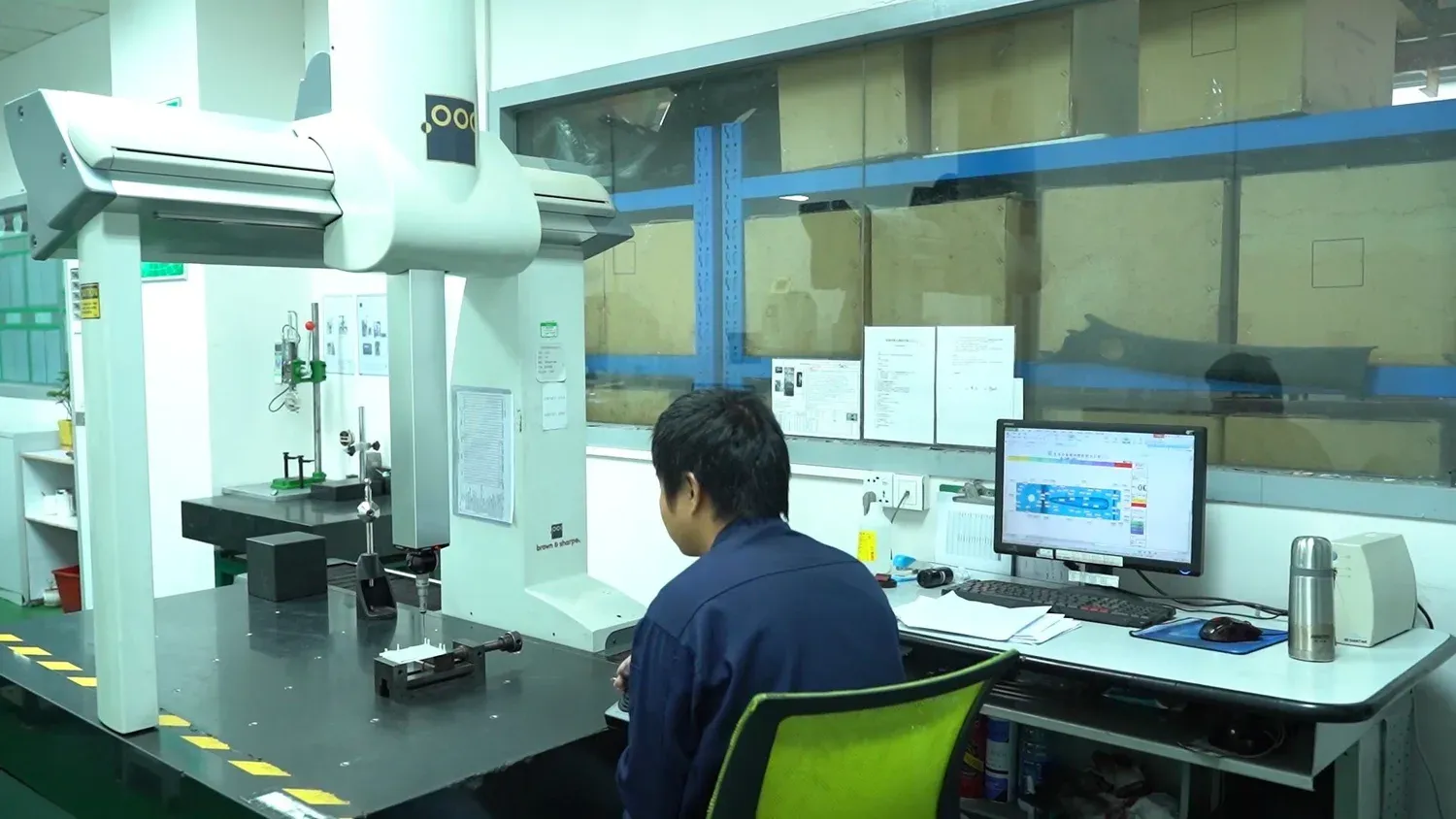
- Trial shots and first-article inspection. Molded samples measured and reported (CMM reports available) against the validated machined reference.
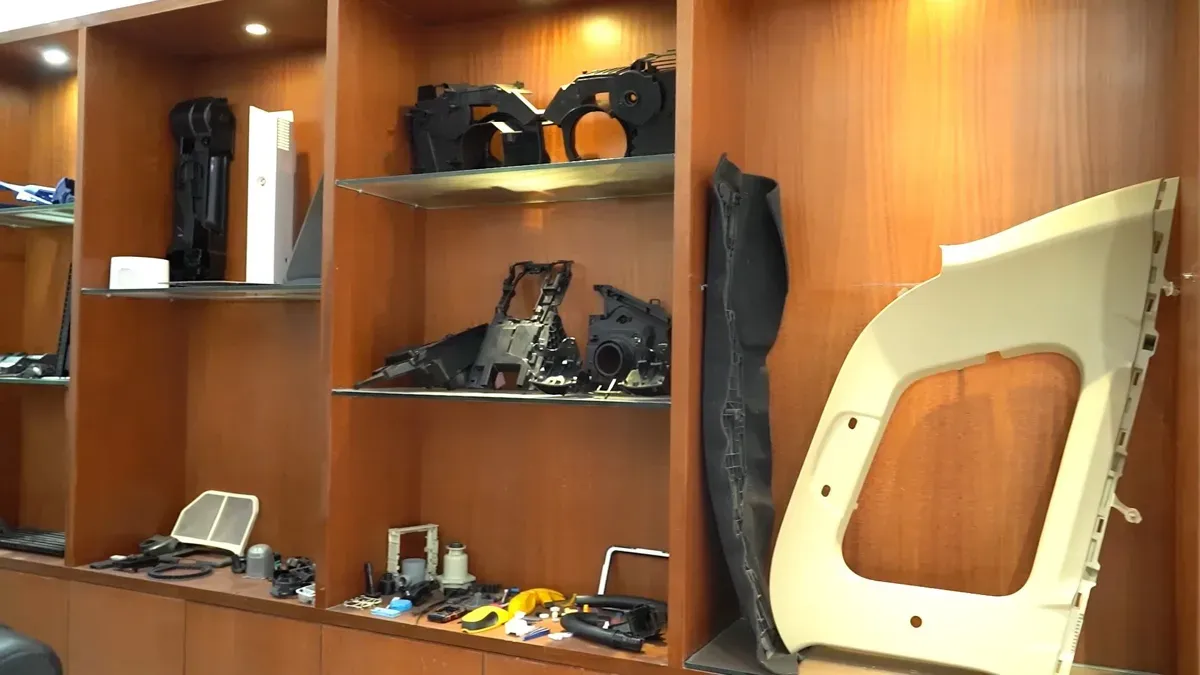
- Molding production. Presses from 90T to 470T, two-shot and overmolding available, with machined post-processing in-house for any feature that molds better unfinished — a threaded metal insert, a precision bore — than it molds directly.
At every stage, you own the decision to continue, pause or stop. Nothing about stage 2 obliges stage 4.
The Hybrid Options Most Buyers Miss
The choice is rarely binary — "machine everything" or "mold everything." Four hybrid routes come up constantly in our project reviews. Each can move the economics more than the headline decision:
- Mold near-net, machine the precision. Cast or mold the general shape cheaply, then CNC-machine only the features that need real accuracy — bearing bores, sealing faces, threaded holes. The machining bill shrinks to minutes per part because the bulk shape arrives free from the tool. Our die casting work runs exactly this way: cast the shape, machine the precision — the finishing happens on our own machining centers, under one accountable supplier.
- Bridge tooling. A simpler, faster, lower-cavitation mold built to serve pilot and early production while demand proves itself. If the product takes off, the production tool follows with the design already validated in molded form — a far better position than jumping straight to a hardened multi-cavity tool on an unproven product.
- Machined inserts inside molded parts. A plastic part with one genuinely stressed feature — a thread that will be used daily, a metal wear surface — can be overmolded or assembled around a small machined metal insert. You pay machining prices for a few grams of metal and molding prices for everything else.
- Machining as the permanent small-variant line. Many product families end up split: the high-volume core product molds, while low-volume variants, regional versions and spare parts stay on CNC indefinitely. Planning that split from the start avoids tooling for variants that will never repay it.
Sitting anywhere near the borderline? Ask for the hybrid options explicitly in the DFM review. A supplier fluent in only one process will rarely volunteer them.
When Machining Wins Even at Volume
To keep this honest: some parts should stay machined forever. No mold, ever.
- Precision metal parts — bearing housings, instrument components — where ±0.025 mm-class tolerances across features are the product.
- Low-volume industrial and spare parts, where demand is a few hundred a year indefinitely.
- Parts in non-moldable materials (PTFE, UHMW) or where material properties of solid stock matter.
- Very large parts beyond sensible mold and press sizes.
- Products with continuous design evolution — each revision is free in machining, costly in steel.
And the reverse is true. Some parts should skip machining almost immediately — simple, frozen, high-volume plastic parts, where every machined batch is money spent avoiding an obviously justified mold.
A Note on Forecasts: Plan for the Volume You Can Defend
Every break-even calculation is only as good as the forecast inside it, and forecasts for new products are systematically optimistic. So run the arithmetic three times: at your expected volume, at half of it, and at double. Molding wins at all three? Tool with confidence. Machining wins at all three? Stop debating. The interesting case is the middle one, where the answer flips between scenarios — and that's precisely what the staged route was designed for. It lets reality, not a spreadsheet, tell you which side of the line the product lives on, before the tooling money is committed.
FAQ
At what quantity should I switch from machining to molding?
There is no universal quantity — it depends on your part's machining complexity, mold complexity and molded unit price. As a method: get both quotes on the same drawing and divide the mold cost by the per-part saving; that quotient is your break-even. Our DFM review produces both numbers for your specific part.
Can the same drawing be used for machined prototypes and the mold?
Largely yes, if the prototype was designed with molding rules in mind (uniform walls, draft). Where the molded version needs adjustments, we flag them in the first DFM review, so the machined articles validate the moldable geometry rather than a shape that will later change.
Will molded parts hold the same tolerances as machined ones?
On selected features, molded parts can hold tight tolerances, especially with machined post-processing. Across an entire part, molding tolerances are generally looser than machining. If your design needs precision everywhere, that alone may settle the process choice.
Can I start molding with a cheaper prototype (bridge) mold?
For many parts, yes — a simpler, lower-cavitation tool can serve pilot and early production volumes before a fully hardened multi-cavity tool is justified. Whether it suits your part depends on geometry and resin; we will lay out the options in the tooling quote rather than defaulting you to the most expensive tool.
What happens to my mold if I change suppliers later?
Ask any toolmaker this before ordering. Our position is simple and we put it in the project documents: the mold you paid for is your property. (See the mold pages → Custom Plastic Injection Molds for how projects are documented.)
Does two-shot molding change the calculation?
It raises tool cost and press sophistication (we run two 360T two-shot machines) but can eliminate assembly steps and secondary operations — seals, grips and multi-color parts in one cycle. The break-even then includes the assembly labor it removes, which often moves it more than buyers expect.
Can metal parts use this staged logic too?
Yes, with die casting in the molding role: machine prototypes and early batches, then — for suitable aluminum or zinc geometries at volume — cast near-net shape and finish-machine the precision features in our factory.
How long does each stage take?
Machined prototypes avoid the tooling wait entirely, which is their main schedule virtue. Mold build time depends on tool complexity and is stated in the tooling quote after DFM; molding production cycles are then short. We confirm timelines per project rather than publishing generic day counts that would not survive contact with your specific part.
Related Reading
- → Custom Plastic Injection Molds — how tooling projects run at HAFO
- → Custom Injection Molded Parts — production molding, 90T–470T
- → Engineering Plastics for CNC Machining & Molding — which resins suit which process
- [→ CNC Machining] — services and specifications
CTA: One drawing, both answers: what it costs machined now, and whether — and when — a mold would pay. Free DFM review, quote within 24 hours, no obligation to take the second stage. NDAs welcome.