Buying Guides
5-Axis vs 3-Axis CNC Machining: How to Choose
The Short Answer
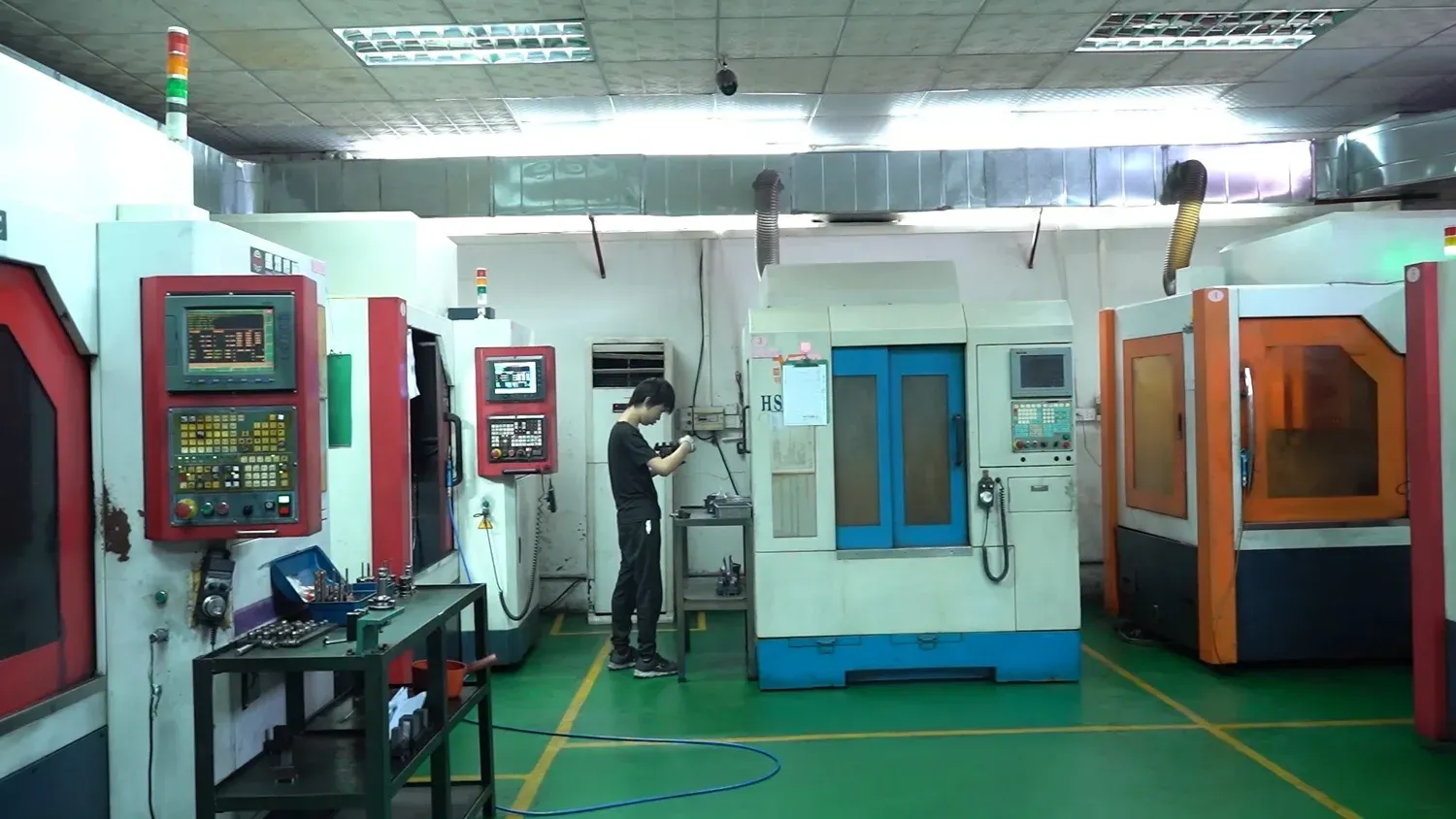
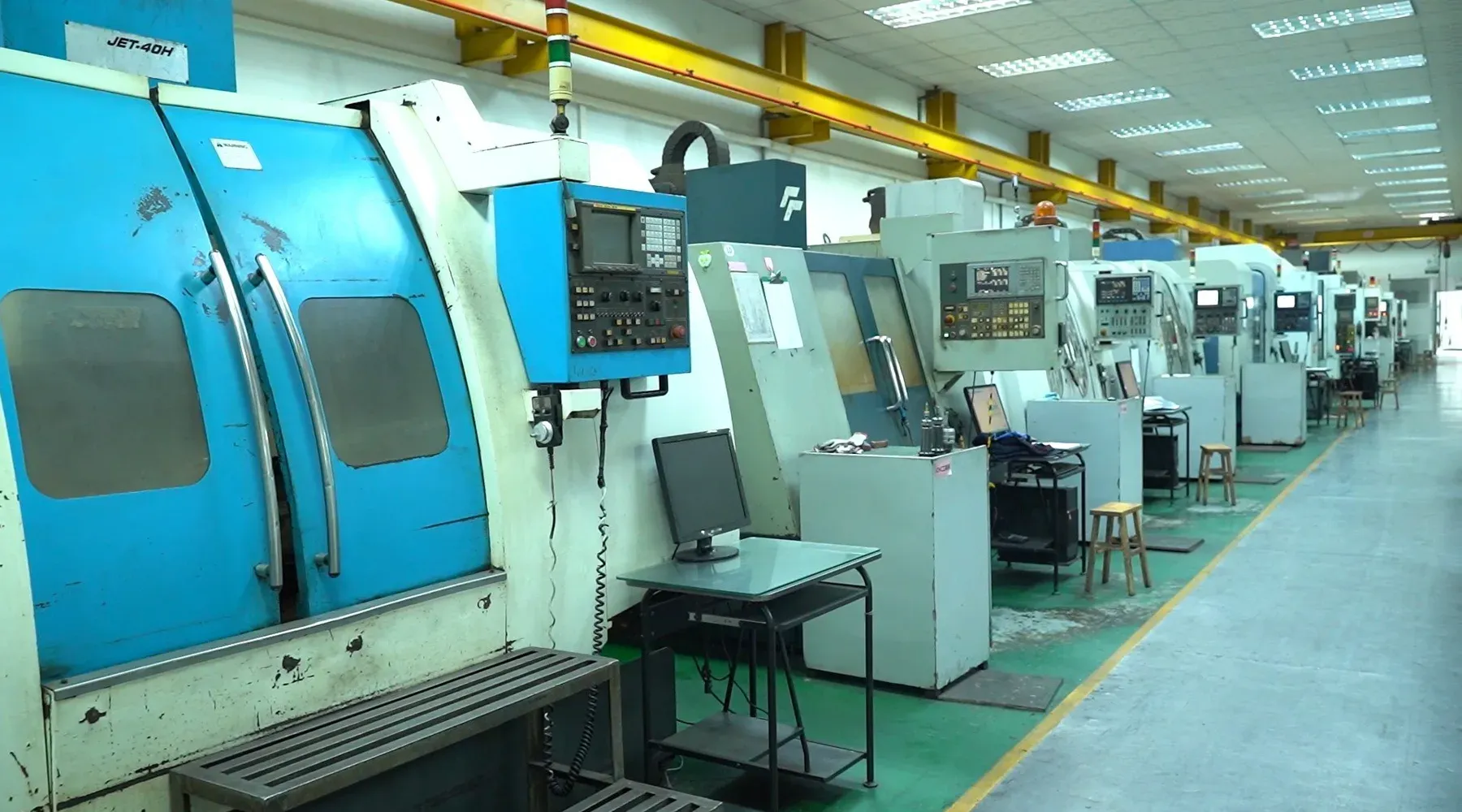
Choose by geometry. Not by prestige. A 3-axis machine moves the cutter in X, Y and Z and machines one face at a time; it is the fastest, cheapest way to make flat, prismatic parts — plates, pockets, simple housings — and most machined parts in the world are exactly that. A 5-axis machine adds two rotary axes, tilting and rotating the part (or the head) so the cutter reaches angled faces, curved surfaces and undercuts, usually in a single setup. That reach costs more per hour. It also kills re-clamping — and with it the setup time and the accuracy loss that come with every re-fixturing. The rule from our own floor — we run 38 three-axis, 13 four-axis and 18 five-axis machining centres, so we have no fleet to favour — is this: if the part can be finished from one or two directions without heroics, 3-axis wins; if it needs three or more orientations, has features on angled planes, or has geometry a vertical cutter simply cannot reach, 5-axis usually wins on total cost as well as accuracy. Below is that rule unpacked, so you can apply it to your own parts before you send an RFQ.
How 3-Axis Machining Actually Works
On a 3-axis vertical machining centre, the table carries the part in X and Y while the spindle moves in Z. The cutter always approaches from above, perpendicular to the table. Everything reachable by a straight vertical toolpath — face milling, pockets, slots, drilled and tapped holes, 2.5D contours — is natural territory. Anything on the sides or underside waits for a human: the operator unclamps the part, fixtures it in a new orientation, re-establishes the datum, and machining continues.
Sounds like a limitation. For some parts it is. Now look at what 3-axis gives back: rigid, simple workholding; huge installed capacity (it is the most common machine format on earth, and 38 of our 69 centres are 3-axis); fast programming; the lowest machine-hour cost in the building. For a flat mounting plate with forty holes, a 3-axis centre is not the budget option. It is simply the correct machine. Put that plate on a 5-axis centre and you add cost and nothing else. A large share of real-world parts — brackets, covers, enclosures' flat components, manifolds with vertical ports, prototype plates — live happily and entirely on 3 axes.
How 5-Axis Machining Actually Works
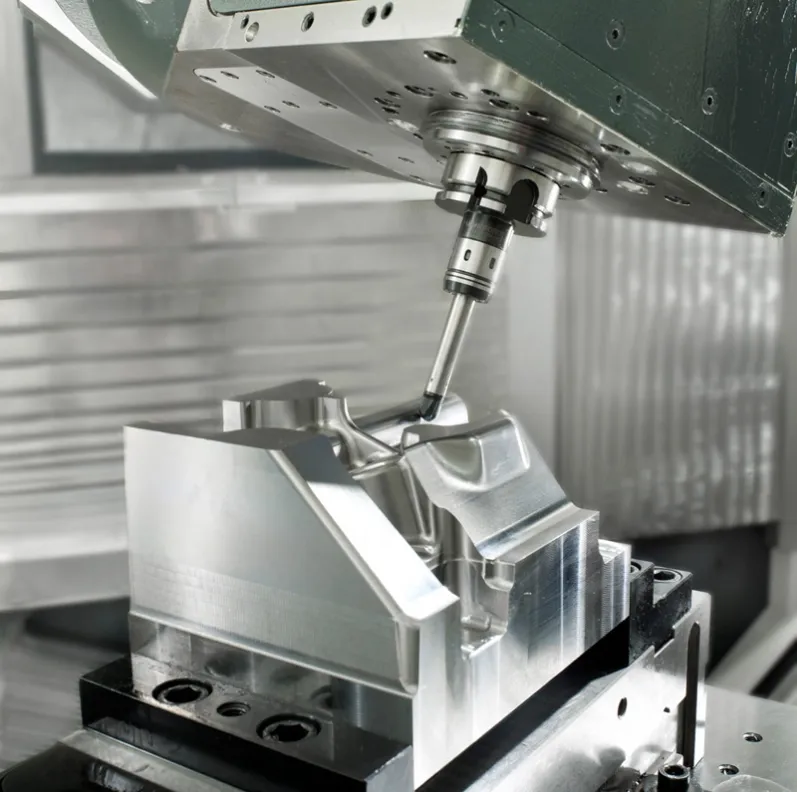
A 5-axis centre keeps X, Y and Z and adds two rotations — typically a tilting/rotating table (trunnion) or a swivelling head — so the part can be presented to the cutter at almost any angle, and the cutter itself can lean into the work. Two working styles matter to buyers:
- 3+2 (positional) machining: the rotary axes tilt the part to a chosen angle and lock; the machine then cuts with 3-axis moves. This is how most multi-face parts are made: five faces of a housing machined in one clamping, each face approached squarely, accurately located relative to the others because the part never left the fixture.
- Simultaneous 5-axis machining: all five axes move together, continuously steering the cutter along curved surfaces — impellers, turbine-style blades, sculpted housings, deep curved cavities. This is the capability with no 3-axis substitute at all: the surface simply cannot be generated by vertical passes.
Two consequences follow. First, reach: angled holes, undercut features, and faces that are not parallel or perpendicular to anything become ordinary. Second, tool geometry: a tilted cutter can use a shorter, stiffer tool in deep features, which leaves a better finish with less chatter than a long tool reaching down a pocket on a 3-axis machine. Both consequences show up in parts quality, not just in the brochure.
Where 4-Axis Fits: The Middle Answer
Four-axis machining adds a single rotary axis — usually a rotating table or indexer that turns the part around one horizontal axis while the cutter works. It suits parts whose features wrap around one axis of rotation: shafts and cylindrical parts needing milled flats, keyways or cross-holes at several angles; manifolds with ports around their circumference; long parts machined along their length with features at indexed positions. We run 13 four-axis centres, and they quietly absorb a big middle category: parts that would take three or four tedious re-clampings on a 3-axis machine, but whose geometry is rotational rather than freeform — so full 5-axis would be paid for and never used. "Round-ish, with features at angles around it"? 4-axis is very often the answer. A good DFM review routes it there without being asked.
The Setup Rule: Why Re-Clamping Costs Twice
Every machinist's rule of thumb, formalised: each time a part leaves its fixture, you pay twice — once in time, once in accuracy.
The time cost is visible: unload, clean, re-fixture, indicate, re-probe datums, and often a fresh first-article check for the new orientation. Across a batch, that is real machine-adjacent labour on every setup, and it multiplies with quantity.
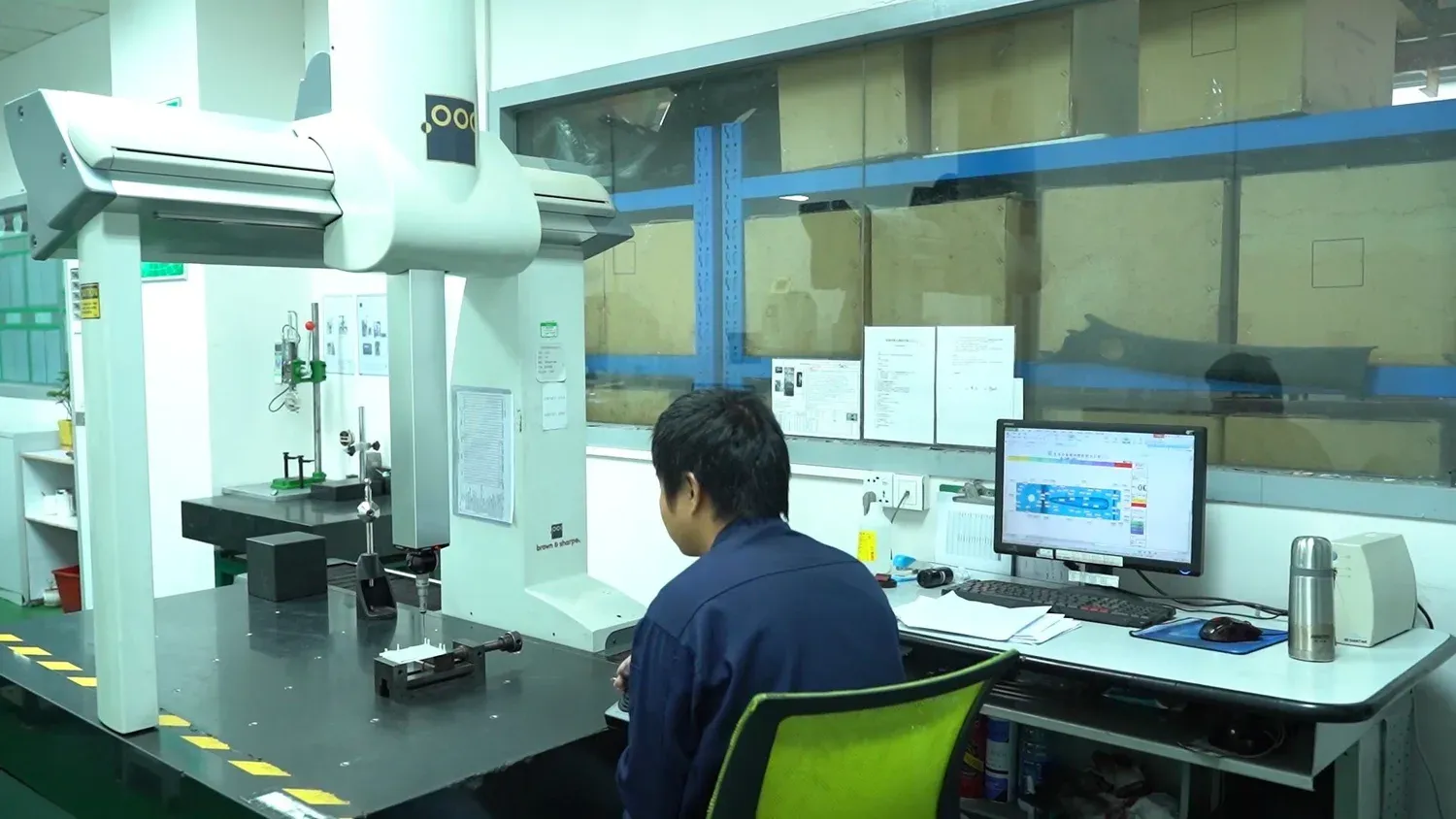
The accuracy cost is quieter. And more important. Features machined in one setup are located relative to each other by the machine's own motion — accurate to the machine's calibration. Features machined across setups are located through the fixture, the operator's datum-picking, the probing cycle. Each transfer adds its own small error, and the errors stack exactly where you least want them: between features on opposite faces — the relationships (hole-to-hole across a housing, face-to-bore) assemblies actually care about. That is why a part priced "cheaper" on 3-axis sometimes arrives as a dispute: every individual dimension measures within tolerance, while the relationships have drifted. One-setup machining does not make a machine more precise. It removes the transfers where precision leaks away. The wider tolerance discipline is in → CNC Machining Tolerances Explained: Standard vs. Precision; the point here is narrow and practical: count the setups a part needs on 3-axis. At three or more, the 5-axis quote frequently wins even before accuracy enters the argument.
The Economics, in Relative Terms
Refuse two simplifications and the comparison gets honest: "5-axis is expensive" (per hour, true; per part, often false) and "5-axis is better" (for a flat plate, it is merely dearer). The economics break into four factors:
Cost factor | 3-axis | 5-axis | 4-axis |
|---|---|---|---|
Machine-hour rate | Lowest | Highest | Middle |
Setups for a multi-face part | One per orientation | Usually one total | One, indexed |
Setup labour per part/batch | Repeated per setup | Once | Once |
Accuracy between faces | Degrades with each re-clamp | Held by machine motion | Held around the rotary axis |
Scrap/dispute risk on complex parts | Rises with setup count | Lowest for its geometry class | Low for rotational parts |
Read the table as a break-even question, not a ranking. One- or two-setup part? The 3-axis line wins every row that matters. Four orientations on 3-axis? Repeated setup labour, repeat first-article checks and elevated scrap risk routinely overtake the 5-axis machine's higher hourly rate — and the crossover arrives sooner as quantities grow, because setup decisions repeat on every batch while programming is spent once. So quantity belongs in the conversation from the start → How to Get an Accurate CNC Machining Quote: What to Include in Your RFQ: a one-off prototype may tolerate a clever multi-setup 3-axis route that makes no sense at 500 pieces. The reverse happens too — parts prototyped on 5-axis for speed that migrate to simpler machining once the design settles.
There is also an honest edge case worth stating: if your part can run on 3-axis but the 3-axis queue is long, a factory with a mixed fleet may route it to an available 5-axis centre rather than make you wait. We do this with our own scheduling — with 69 machining centres across the three formats, routing is a capacity decision as much as a geometry one, and the quoted price is what matters, not which of our machines earned it.
The First Part Costs More Than the Second: Programming and Proving-Out
One difference hides in the one-off column. A 5-axis job demands more before the first chip: the CAM programmer defines tool orientations, checks the whole toolpath for collisions between holder, head, fixture and part — in simulation, because finding them on the machine is not an option — and proves the program carefully on the first article. A simple 3-axis job goes from model to metal with a fraction of that preparation. So a single 5-axis prototype can look disproportionately expensive next to its production price. Much of what you are buying is the program and the proof. Both are spent once. It cuts both ways: that proving discipline is why a well-run 5-axis cell repeats so consistently once dialled in, and why the multi-setup 3-axis alternative quietly re-spends a smaller proving cost at every setup, every repeat batch. Comparing quotes for a part you will order again? Compare at the repeat quantity, not only at the prototype. The ranking can flip. Ask for both numbers in your RFQ → How to Get an Accurate CNC Machining Quote: What to Include in Your RFQ.
Two Myths Worth Retiring
"3-axis is obsolete." The opposite is visible on our own floor: 38 of our 69 machining centres are 3-axis because the majority of the world's machined parts are prismatic and belong there. A machine format is obsolete when parts stop fitting it, not when a newer format exists. Shops that retire 3-axis capacity raise their prices on simple parts to feed expensive machines — you can see it in their quotes.
"5-axis parts are automatically better finished." A 5-axis machine gives the programmer options — shorter tools, better approach angles, continuous passes along a curve — and good programmers turn those options into finish. A tilted toolpath run carelessly, though, scallops a surface just as happily as a vertical one. And a sealing face still has to be specified, machined and inspected as a sealing face, whatever the format → CNC Machining Tolerances Explained: Standard vs. Precision. Format buys capability. Process discipline buys quality. Ask about both.
The Decision Framework: Read Your Part's Geometry
Work through these six questions with your part (or its CAD) in front of you:
- How many faces carry features? One or two → 3-axis territory. Three or more → price 5-axis (3+2) seriously; the setup arithmetic is already turning against re-clamping.
- Are any holes or features on angled planes? Holes drilled at an angle to every main face, fittings on sloped pads, threads that must be true to a tilted surface — these are re-fixturing nightmares on 3-axis and a tilt of the table on 5-axis.
- Are there undercuts or features a vertical cutter cannot reach? Side-action slots, internal features opening sideways, overhanging lips: on 3-axis these mean special tooling, secondary operations or redesign. On 5-axis they are usually just geometry.
- Are the surfaces curved in three dimensions? Sculpted housings, flow passages, blade-like forms: simultaneous 5-axis is the only machining route that generates them directly. (The alternative — redesign to faceted, 3-axis-friendly surfaces — is legitimate if the function allows it, and a DFM review will say so.)
- Do features on opposite faces have to relate tightly? A bore through a housing that must sit true to a mounting pattern on the back face is a one-setup argument: 5-axis holds the relationship by construction.
- Is the part rotational with features around its circumference? Flats, keyways, radial ports at indexed angles → 4-axis is likely the sweet spot between the other two.
If questions 2–5 mostly answer "no" and question 1 says one or two faces, you have a 3-axis part and should resist any quote that routes it elsewhere. If several answer "yes," you have a 5-axis part and should be suspicious of a conspicuously cheap 3-axis quote — the saving usually reappears as setup charges, schedule slip or a conformance argument.
Examples by Part Type (Illustrative)
The examples below are generic part types, described to show the routing logic — the right machine follows from the shape:
- Flat mounting plate, vertical holes, one engraved face. One orientation, all features from above. Pure 3-axis; anything else is wasted money.
- Rectangular enclosure housing, features on five faces, connector cutouts around the sides. The classic 3+2 case: five faces in one clamping on a 5-axis centre, with face-to-face relationships held by the machine. On 3-axis it is five setups and four chances to drift.
- Pump/manifold body with ports on several angled faces. Angled planes decide it: 5-axis, because each port's angle and position relative to the others is the function of the part.
- Steel shaft with milled flats, a keyway and cross-holes at 90° intervals. Rotational geometry with indexed features: turning plus 4-axis milling is the economical, accurate route.
- Curved impeller-style or turbine-style component. Simultaneous 5-axis, no debate — the blades' surfaces cannot be produced by repositioned vertical passes.
- Deep-pocketed bracket, all features from one side, thin walls. Stays 3-axis or 3+2 depending on pocket access; a tilted approach with a short stiff tool (5-axis) can improve wall finish, but if a 3-axis route reaches everything, it wins on rate. This is the category where quoting both ways is genuinely informative.
- Large flat-ish cover with a gentle continuous curve. Profile-controlled surface; 5-axis earns its place if the curve is functional (sealing, aerodynamics), but if the curve is cosmetic, ask whether a 3-axis approximation with a fine step-over is acceptable — often it is, and the saving is real.
Notice the pattern: nobody routes by part value or part size. A small, cheap-looking manifold can be a true 5-axis part. A large, expensive housing can belong entirely on 3-axis. Geometry decides. Which is why the fastest route to a correct answer is to let an engineer look at the model — and why our DFM review is free.
The Size Envelope and Other Practical Limits
Our CNC travel extends to 800 mm, which covers the great majority of housings, brackets, manifolds and complex components we are asked to quote; parts near or beyond the envelope are assessed individually in the DFM review rather than assumed. Material is rarely the deciding factor between machine formats — we machine aluminium alloys, stainless steels, carbon and alloy steels, brass, copper, titanium, magnesium and engineering plastics across the fleet → Aluminum Alloys for CNC Machining → Engineering Plastics for CNC Machining & Molding — though hard materials deepen the value of rigid, short-tool 5-axis work, and delicate thin-walled parts deepen the value of single-setup handling. Turning and mill-turn capacity sits in the same shop, so a rotational part with milled features does not change suppliers mid-part → CNC Turning Parts, and wire EDM and EDM handle the sharp internal corners no rotating cutter can make.
Decision Checklist
Before your next RFQ, run down this list:
- Faces with features: count them. 1–2 → 3-axis default; 3+ → get a 5-axis comparison.
- Any angled holes, pads or threads? → 5-axis (3+2) almost certainly.
- Any undercuts or sideways-opening features? → 5-axis, or expect secondary operations.
- Any true 3D curved surfaces? → simultaneous 5-axis.
- Rotational part with features around it? → turning + 4-axis.
- Tight relationships between opposite faces? → one-setup machining (5-axis).
- Simple prismatic part? → 3-axis, and question any quote that says otherwise.
- Still unsure? → send the STEP file and ask for both routes to be priced; the DFM review is free and the comparison itself is the answer.
And one meta-rule that covers every case we have not imagined: never specify the machine in your RFQ unless you have a reason. Specify the part — geometry, material, tolerances, finish, quantity. Factories with mixed fleets will route it to the machine that serves it best, and factories invested in one format will quietly route everything to that format. The RFQ guide explains what to include instead → How to Get an Accurate CNC Machining Quote: What to Include in Your RFQ.
When the Process Question Is Bigger Than the Machine Question
Sometimes the honest answer to "3-axis or 5-axis?" is "neither — this part should not be machined at volume at all." If quantities are climbing into the thousands and the design has settled, injection molding (tooling built in a factory like ours, where the mold shop sits next to the CNC shop) usually takes over on unit cost, with machining kept for prototypes and bridge production. That decision has its own framework, laid out in [→ CNC Machining vs Injection Molding: Which Is Right for Your Part?]. It cuts the other way too: plenty of parts that look like molding candidates are better machined forever — volumes are modest, the design still changes, or the material only behaves in solid form. Machine question, process question: both are geometry-plus-volume questions at bottom. And both are answered free in a DFM review.
FAQ
Is 5-axis machining always more expensive than 3-axis?
Per machine hour, yes. Per finished part, often no: a part needing three or more setups on a 3-axis centre accumulates setup labour, repeat first-article checks and scrap risk that can exceed the 5-axis rate — before counting the accuracy benefit. For one- and two-setup prismatic parts, 3-axis is unambiguously cheaper, and we will route your part there.
How do I know which process my part needs?
Read the geometry: number of faces with features, angled features, undercuts, curved surfaces, relationships between opposite faces. The framework and checklist above cover most parts. If it is still ambiguous, send the STEP file — the free DFM review routes it across our 38 three-axis, 13 four-axis and 18 five-axis centres and the quote reflects the right machine.
What is 3+2 machining, and is it "real" 5-axis?
3+2 (positional) machining tilts and locks the rotary axes, then cuts with 3-axis moves. It is a fully legitimate 5-axis strategy and the right one for most multi-face parts: it delivers one-setup access to five faces without the complexity of simultaneous motion. Simultaneous 5-axis — all axes moving together — is reserved for genuinely curved geometry.
When does 4-axis make more sense than both?
When the part is rotational and its features are arranged around one axis: shafts with flats and keyways, cylindrical parts with radial ports, long parts with indexed features. It replaces several 3-axis re-clampings at a lower rate than full 5-axis, which would bring capability the part never uses.
Does 5-axis machining hold better tolerances?
It holds relationships better. A dimension within one face is a machine-accuracy question on any good centre; the distance and angle between features on different faces is where multi-setup work loses ground to re-clamping error. Single-setup 5-axis machining locates all faces by machine motion, so cross-face relationships — positions, angles, concentricity across the part — come out tighter in practice. See → CNC Machining Tolerances Explained: Standard vs. Precision for the tolerance tiers themselves.
Can a part be too simple for 5-axis?
Absolutely — most parts are 3-axis parts. A flat plate on a 5-axis centre costs more and gains nothing. Any supplier who routes everything to their newest machine is optimising their utilisation, not your invoice. Judge by whether the quote's routing matches your part's geometry.
What is the largest part you can machine?
Our CNC travel extends to 800 mm. Parts approaching or exceeding that envelope are assessed individually during the free DFM review — tell us the bounding box in your RFQ and we will confirm feasibility with the quote.
Should I specify 3-axis or 5-axis in my RFQ?
Almost never. Specify the part — files, material, tolerances, finish, quantity — and let the factory route it. Specifying a process can lock you out of a cheaper route (or a better one) that the geometry would have justified. The exception is when you have a genuine constraint, such as matching a previously qualified process.
Can you quote my part both ways?
Yes. If the geometry sits near the crossover, ask in your RFQ and we will price the realistic alternatives — typically a multi-setup 3-axis route and a one-setup 5-axis route — so you can compare total cost and accuracy rather than hourly rates. The DFM review and the quote are free, within 24 hours.
What if my quantities grow — does the right answer change?
It can. Programming effort is spent once while setup decisions repeat per batch, so volumes shift the break-even between routes, and at sustained high volumes the larger question — machining versus molding — enters. Mention expected future quantities in your RFQ so the quote is built for where the part is going, not only where it starts.
Let the Geometry Decide
Send us the STEP file and the argument ends: an engineer reviews the part free of charge, routes it across our 3, 4 and 5-axis fleet, and quotes the process that fits within 24 hours. If 3-axis is right, that is what you will pay for — our → 5-Axis CNC Machining Parts page exists for the parts that genuinely need the reach, and our → CNC Machined Parts hub covers everything else. The worst outcome in this decision is not picking the "wrong" machine; it is picking one without looking at the part.