Injection Molded Parts
Two-Color & Overmolded Parts
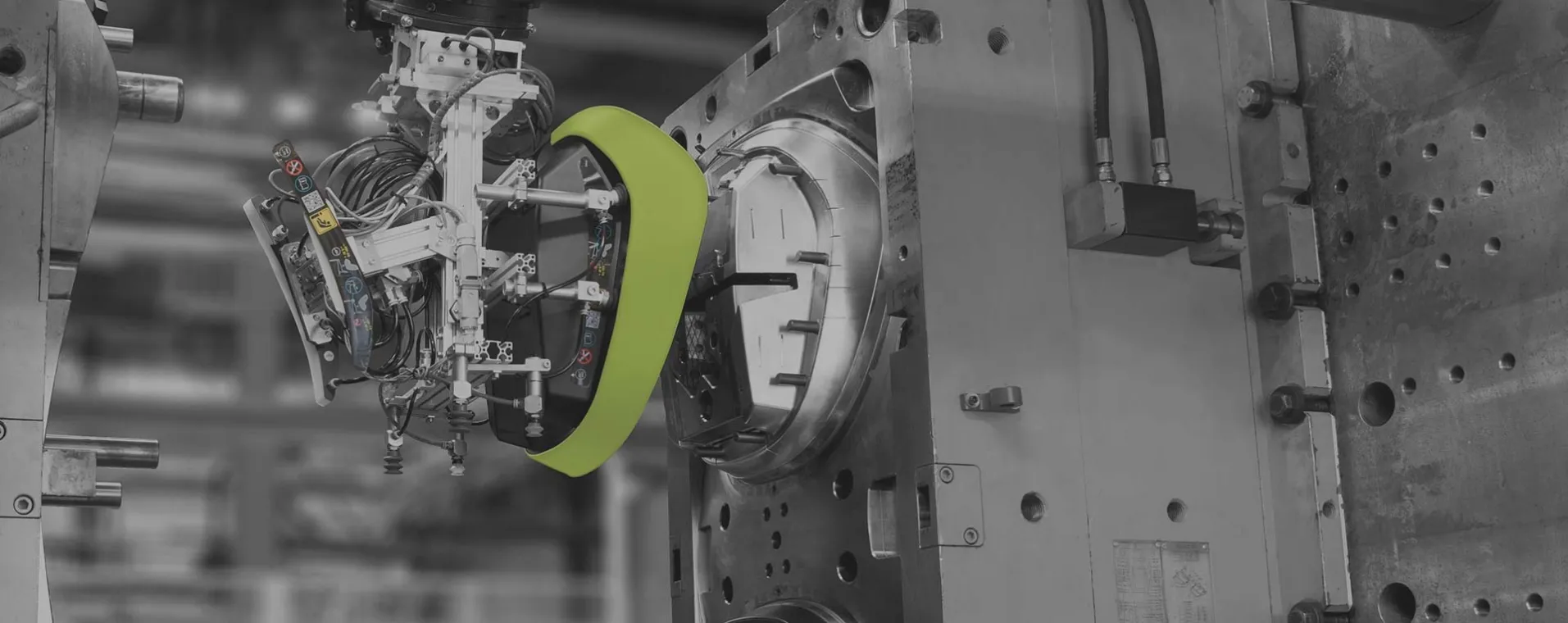
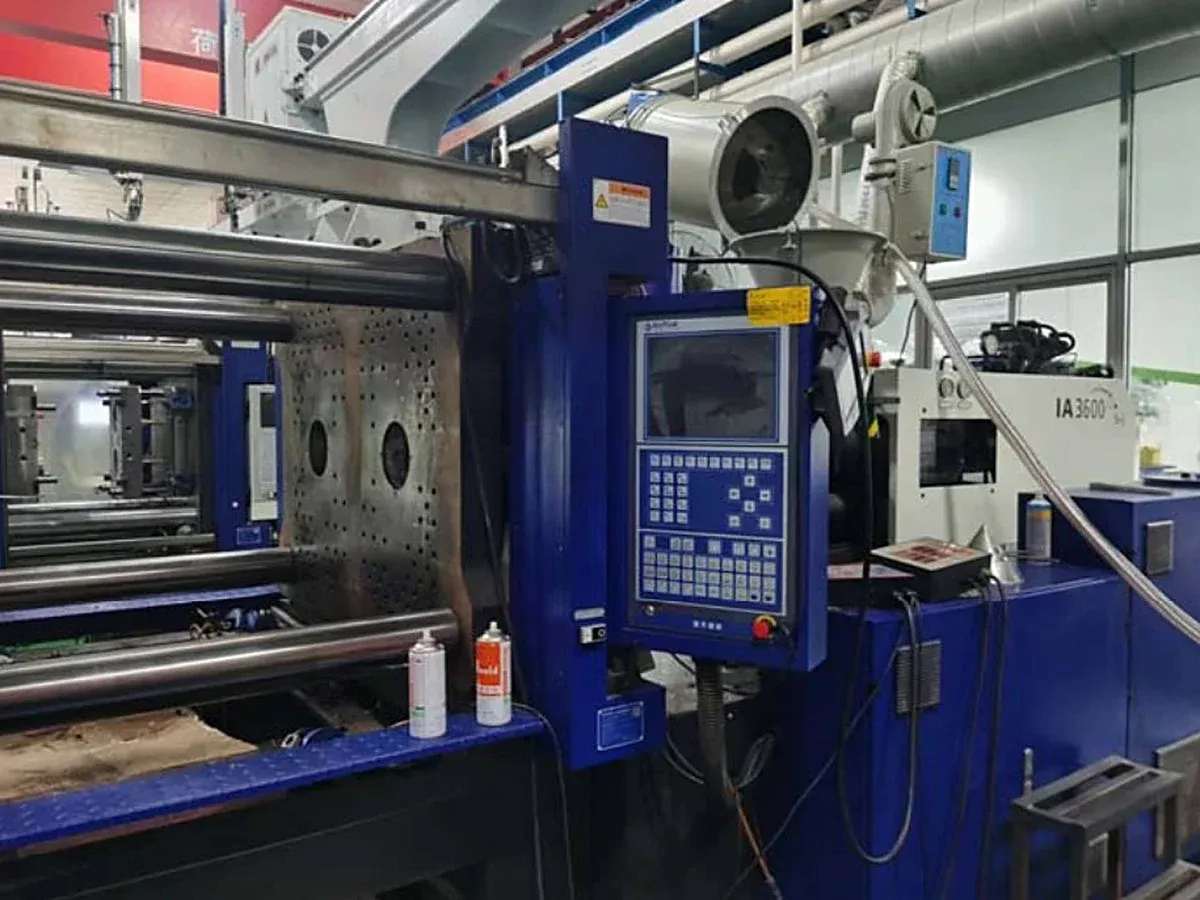
Two-color and overmolded plastic parts produced on two 360T two-shot Haitian machines — rigid + soft grips, sealed enclosures and two-color components molded in a single cycle. Tooling built and trialled in the same factory. Free DFM and quote within 24 hours.
A grip that peels, a seal that leaks, a two-color cover whose second color flashes across the parting line — two-material parts punish shortcuts. Produced properly, though, they delete whole assembly steps: no separate gasket to buy and fit, no adhesive to fail, no printed legend to wear off. HAFO Mould produces two-color and overmolded parts on two 360T two-shot Haitian machines in Dongguan, with the tooling designed, built and trialled in the same factory. The machine that proves your samples is the machine class that runs your production.
Send Your Design — Free DFM Review + Quote Within 24 Hours. STEP, STP, IGES, STL, X_T and 2D PDF accepted. NDAs welcome.
2 × 360T two-color Haitian machines · Toolroom in-house (13 high-speed CNC, 8 EDM, 6 wire-cut) · Trials and production on the same machines · ISO 9001:2015 certified — scope: Manufacturing of Hardware Molds and Parts · Export deliveries to the US, Germany, France, Portugal, Sweden and Spain.
What Two-Shot Molding Gives You
- A seal that is part of the part — gasket geometry molded directly onto the housing, sealing every time without assembly variation
- Soft-touch where hands go — rigid structure underneath, compliant grip surface exactly where the user holds the product
- Color and information molded in — two-color buttons, indicators and covers whose markings cannot rub off
- Fewer parts to buy and assemble — one molded component replaces a rigid part + gasket + grip + fasteners
Good For
- Power-tool and appliance grips and handles
- Waterproof and dust-sealed electronic enclosures
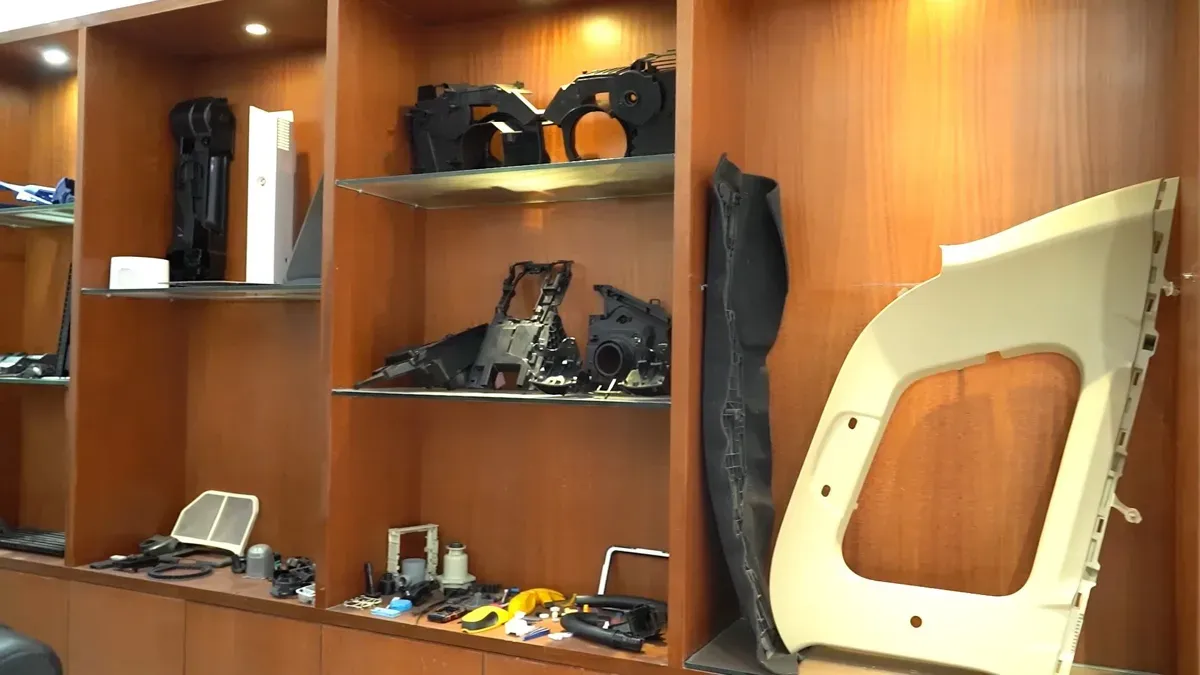
- Automotive interior components and functional trim
- Buttons, knobs and indicators with molded-in color or legends
- Medical-adjacent device housings and grips (non-implant, non-sterile applications)
- Consumer products where feel and finish sell the product
Two-Shot or Overmolding? We Run Both
Two-shot (2K): both materials injected in a single cycle on the two-color machine — first the rigid substrate, then the second material. Fastest per part at volume, with precise registration between materials.
Overmolding: the substrate is molded first (or supplied as an insert), then placed in a second tool where the soft layer is added. Suits lower volumes, larger parts and metal-insert combinations.
Both routes are reviewed in the free DFM — including the question buyers forget to ask: will the soft material actually bond to the substrate? Where chemical bonding is unreliable, the design needs mechanical interlocks, and it is far better to learn that from our review than from your returns department. The tooling side of both processes is covered at Two-Shot & Overmolding Molds.
Materials
Rigid substrates in ABS, PC, PA and PP with soft TPE-type overmold layers are the common combinations; other pairings are reviewed case by case. State both intended materials in your RFQ (or describe the properties you need — hardness, grip, chemical exposure, temperature) and the DFM review confirms compatibility and the hardness of the soft layer before tooling is quoted. Material certificates are available for production lots.
Specifications
Item | Value |
|---|---|
Machines | 2 × 360T two-shot (two-color) Haitian injection machines; standard presses 90T–470T |
Processes | Two-shot molding, overmolding, insert overmolding |
Tooling | |
Materials | Rigid ABS / PC / PA / PP + TPE-type soft layers; combinations confirmed at DFM |
Quality checks | Bond integrity, flash at shut-offs, dimensions vs drawing; reports on request |
Batch sizes | Trial samples first; small batches and volume production |
Lead time | Depends on tooling status and quantity — confirmed in your quote |
Terms | Payment by T/T; shipping DDP, EXW or FOB |
Quality — Checked for Two-Material Failure Modes
HAFO Mould is ISO 9001:2015 certified (scope: Manufacturing of Hardware Molds and Parts). Beyond standard dimensional checks against your drawing (supported by 3 fully automatic CMMs), two-material parts are specifically checked for delamination and bond strength, flash along material shut-offs, and seal integrity where the part is designed to seal. Dimensional and CMM reports and material certificates are available on request, and pre-shipment photos or video show your actual parts before dispatch.
From Design to Part
- Send your design and material intentions. Both materials if decided; if not, describe the function and we recommend. NDAs welcome.
- Free DFM + quote within 24 hours. Bond compatibility, wall transitions, shut-off design and process choice (two-shot vs overmolding) reviewed by engineers.
- Tooling built in our own toolroom — with progress photos during the build.
- Trials on the same machines that will run production. Samples shipped for your approval first.
- Production and delivery. Parts molded, checked, packed and shipped DDP, EXW or FOB; payment by T/T.
Why Produce Two-Material Parts at HAFO
- Tool, trial and production in one factory. The classic two-shot failure — tool built in one place, run in another, blamed on both — cannot happen here.
- Bonding reviewed before tooling. Material compatibility is a DFM checkpoint, not a production surprise.
- Honest process advice. If overmolding or even a single-material redesign serves your volumes better, the review says so.
Design Guidelines for Two-Material Parts
Good two-material parts are designed as a system of two materials, not as a rigid part with soft material added afterwards. The checkpoints in our DFM review:
- Give the soft layer consistent thickness. TPE-type layers mold and grip best at even thickness; feather edges tear and peel, so terminate the soft layer in a groove, step or rounded edge designed for the purpose.
- Design the peel stop. Every soft layer should end somewhere the user's fingernail, tool or cleaning brush cannot get under it. Recessed terminations and mechanical interlocks at the edges are what separate a grip that lasts the product's life from one that lifts in the first year.
- Let the rigid substrate carry the structure. Screws, clips and press fits belong in the rigid material; the soft layer is for grip, sealing and feel. Bosses and fastening features in the substrate keep assembly loads off the bond line.
- Plan the seal as geometry. A sealing lip or bead, compressed by the assembly, seals more reliably than a flat soft face. Tell us what the part must seal against and the IP target your product aims for, and the review addresses seal geometry directly.
- Match hardness to function. Softer layers grip and seal better; harder layers wear better. State how the part is used — gloved hands, wet environments, outdoor UV — and the review recommends the softness range rather than leaving the default on the drawing.
- Keep two-color information functional. Molded-in legends and indicators should be sized for the process: fine text and hairline color splits belong to printing, chunky molded geometry belongs to two-shot.
What Drives the Price of a Two-Material Part
The tool (two cavity sets, indexing hardware, precision shut-offs), the cycle (two injections and an index or transfer step), and the materials. Against the tooling premium, weigh the eliminated costs: separate gaskets, grips and covers, their suppliers and stock, assembly labor, and field failures from mis-assembled seals. For many products the arithmetic favors two-shot clearly at production volumes — and where it does not, overmolding or a redesigned single-material part wins. Both comparisons are part of the free review, with the recommended route quoted in writing.
Two Kinds of "Two-Color" — and Why the Distinction Matters
Some two-shot parts are about materials: a rigid substrate plus a functional soft layer for grip or sealing. Others are about color: one material, two colors, used for buttons, legends, indicators and design accents. The tooling logic differs — color-only tools still need two injection units and indexing, but the shut-offs and bonding questions are simpler, and there is no adhesion risk between identical base resins. Telling us which kind you are designing (or that your part is both: two materials and two colors) lets the DFM review scope the tool correctly instead of pricing the more complex variant by default. If your "two-color" need is really only a logo or legend on a single-material part, we will also tell you honestly when a simpler route serves the same product.
FAQ
What is the difference between two-shot molding and overmolding?
Two-shot injects both materials in one cycle on a two-color machine — fastest at volume. Overmolding molds the soft layer over a previously made substrate in a second tool — more flexible for low volumes and inserts. We run both and recommend based on your part and quantities in the free DFM review.
Will the soft material stay bonded to the rigid part?
That depends on the material pairing — the key engineering question in every two-material project. We review compatibility at DFM stage and design mechanical interlocks where chemical bonding alone is not reliable, then verify the bond in trial parts before production.
What materials can be combined?
Common combinations pair ABS, PC, PA or PP substrates with TPE-type soft layers. Tell us your intended materials or the properties you need (grip, hardness, sealing, temperature, chemical exposure) and we confirm the pairing in the DFM review.
Can you make waterproof or sealed enclosures this way?
Yes — a molded-in seal is one of the strongest uses of two-shot molding, because the gasket is part of the housing and cannot be forgotten, mis-seated or lost in assembly. Share your sealing requirement (and any IP rating your product targets) in the RFQ so gate and shut-off design account for it.
What quantities make sense for two-shot parts?
Two-shot tooling costs more than single-material tooling, so it pays back as volumes grow and assembly steps disappear. Lower volumes often suit overmolding better. Send your expected quantities — the quote lays out the tooling for the recommended route so you can judge the economics.
Can you overmold onto metal inserts or existing parts?
Yes. Insert overmolding is part of our range; send the insert drawing or samples with your RFQ and the DFM review covers location, shut-off and handling.
How do you check quality on two-material parts?
Dimensions against your drawing (CMM-supported), plus specific checks for bond integrity, flash at material boundaries and seal condition. Reports and pre-shipment photos/video are available on request.
Do I need to build the tool with you?
New tools are built in our toolroom Two-Shot & Overmolding Molds, which is how we guarantee tool-machine matching. If you already own a two-shot or overmolding tool, send its specifications and we will assess compatibility with our 360T two-color machines.
How quickly will I get a quote?
Within 24 hours of receiving your files, after the engineering DFM review — including a clear recommendation on two-shot versus overmolding for your part.
What are payment and shipping terms?
Payment by T/T; delivery DDP, EXW or FOB, with regular shipments to the US, Germany, France, Portugal, Sweden and Spain.
Can you sign an NDA?
Yes — NDAs are welcome, and all files are treated as confidential by default.