Injection Mold Tooling
Two-Shot & Overmolding Molds
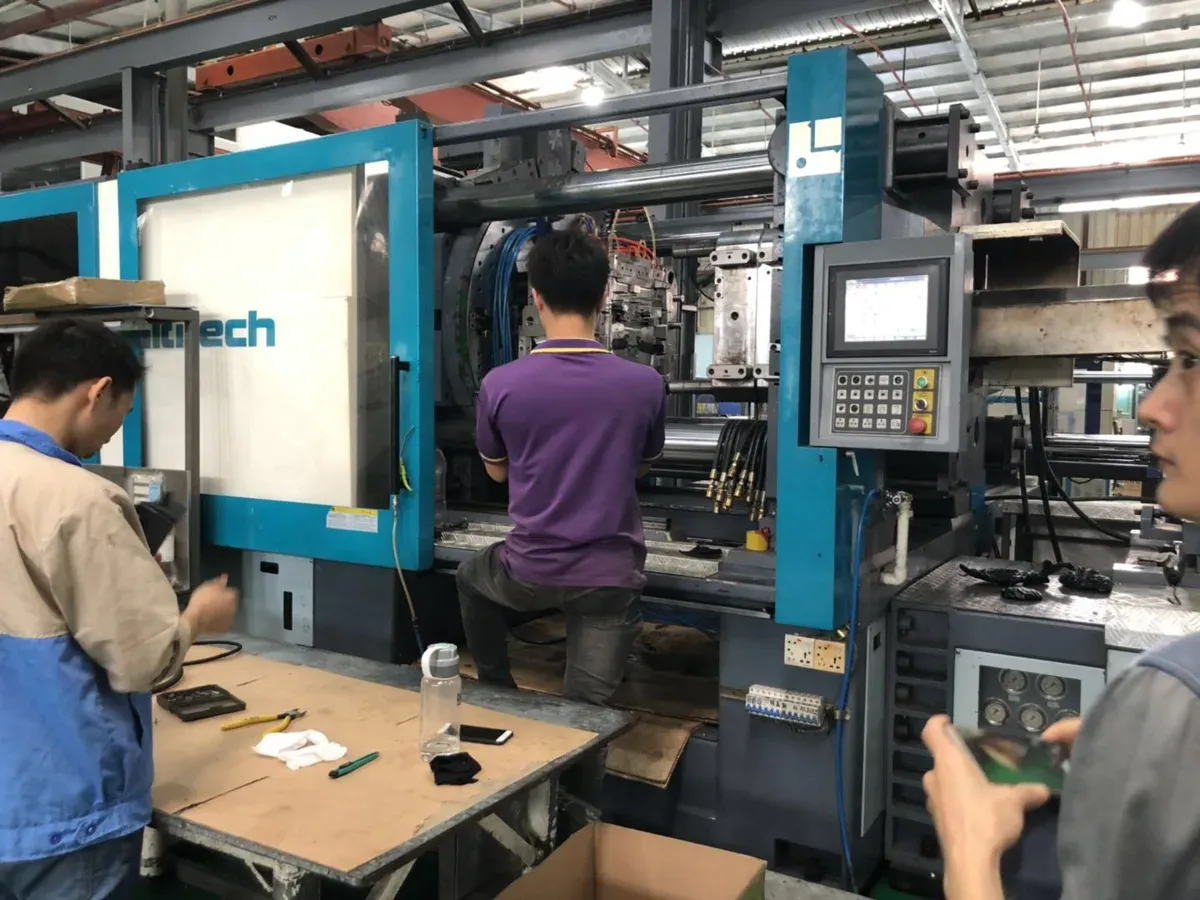
Two-shot (2K) and overmolding tools designed and built in-house, then trialled on our own two 360T two-color Haitian machines — so the tool, the process and the first parts are proven in one factory before you commit to production. Free DFM and quote within 24 hours.
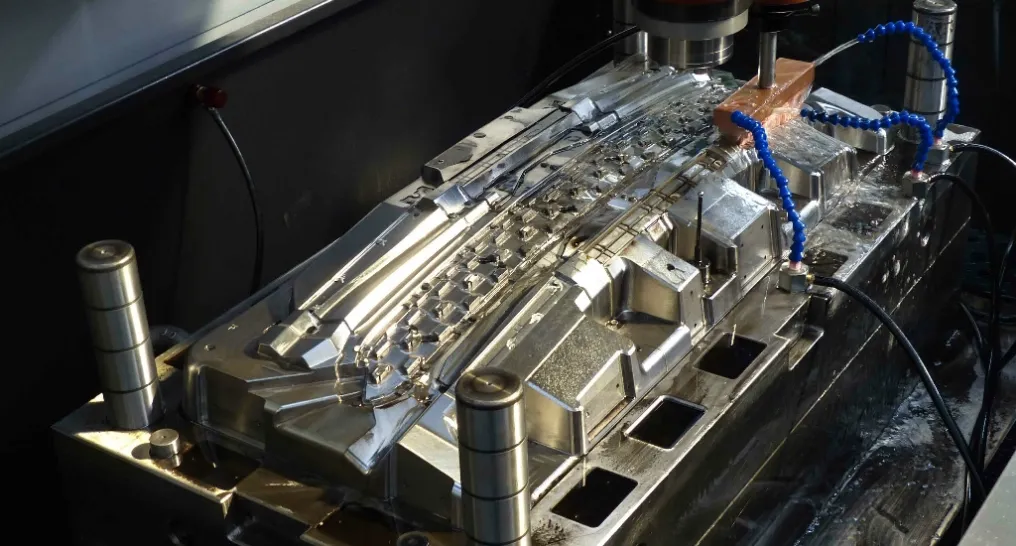
Two-material parts fail in predictable ways: the soft layer peels, flash creeps between the two shots, or the tool is built for a machine it will never run on and the "savings" evaporate in rework. The reliable way to avoid all three is to build the tool where it will be trialled. HAFO Mould builds two-shot and overmolding tools in its own toolroom and trials them on its own two 360T two-color Haitian machines. The tool, the molding process and the first approved parts come from one factory and one accountable team.
Send Your Part Design — Free DFM Review + Quote Within 24 Hours. STEP, STP, IGES, STL, X_T and 2D PDF accepted. NDAs welcome.
Toolroom in-house since 2007 · 13 high-speed CNC · 8 EDM · 6 wire-cut · 3 fully automatic CMMs · Two 360T two-color Haitian machines for trials and production · ISO 9001:2015 certified — scope: Manufacturing of Hardware Molds and Parts.
Two-Shot vs Overmolding — What Is the Difference?
- Two-shot (2K) molding: both materials are injected in one machine cycle — the first shot forms the rigid substrate, the mold rotates or transfers, and the second shot adds the second material or color. Best for volume production of grips, seals and two-color parts.
- Overmolding: a pre-molded (or inserted) substrate is placed into a second tool and the soft material is molded over it. More flexible for lower volumes, insert combinations and parts that start life as a separately molded component.
We build tools for both routes, and the free DFM review will tell you which suits your part, volumes and materials — the honest answer is not always the more expensive tool.
Where Two-Material Tooling Earns Its Cost
- Soft-touch handles and grips — rigid core with a TPE layer where the hand holds it: power tools, appliances, personal-care products
- Sealed housings — gasket and seal molded as part of the housing instead of a separate component to assemble
- Two-color covers, buttons and indicators — legends, windows and color coding molded in, not printed or assembled
- Vibration-damping mounts and bumpers — hard/soft combinations that absorb impact
- Overmolded inserts — soft material molded over rigid plastic or metal components
Toolroom Capabilities for 2K and Overmold Tools
Two-shot tools are the most demanding tools in a standard toolroom: two cavity sets, precise shut-offs between materials, and indexing or transfer accuracy that decides whether the second shot seals or flashes. Our toolroom machines cavities on 13 high-speed CNC machines and 69 machining centers in total (3-axis ×38, 4-axis ×13, 5-axis ×18), cuts fine detail on 8 EDM and 6 wire-cut machines, and verifies components on 3 fully automatic CMMs. Maximum CNC travel is 800 mm (31.5 in).
Material pairing is reviewed at DFM stage: the soft layer must bond to the substrate (or be mechanically locked by design where bonding is unreliable). Tell us your intended material combination and we will flag compatibility risks before steel is committed — this single check prevents the most common two-shot failure, delamination.
Specifications
Item | Value |
|---|---|
Tool types | Two-shot (rotary/index) tools, overmolding tools, insert tools |
Trial & production machines | 2 × 360T two-color Haitian injection machines; standard presses 90T–470T |
Toolroom equipment | 13 high-speed CNC, 8 EDM, 6 wire-cut, CMM inspection ×3 |
Materials | Rigid substrates (e.g. ABS, PC, PA, PP) with soft TPE-type layers — combinations confirmed at DFM |
Design review | Free DFM incl. material-bonding and shut-off review; quote within 24 hours |
Trial samples | Molded in-house on production machines; shipped for approval with reports on request |
Terms | Payment by T/T; shipping DDP, EXW or FOB |
Quality and Trial Discipline
HAFO Mould is ISO 9001:2015 certified (scope: Manufacturing of Hardware Molds and Parts). Trial parts from two-shot tools are checked for the failure modes that matter: bond integrity between materials, flash at shut-offs, seal compression, and dimensions against your drawing. CMM and dimensional reports are available on request, and pre-shipment photos or video let you see trial parts before they are couriered.
How a Two-Shot Tool Project Runs
- Send your design and material intentions. Include both materials if known, plus expected volumes. NDAs welcome.
- Free DFM + quote within 24 hours. We review bond compatibility, shut-off design and process choice (two-shot vs overmolding) and quote the tool accordingly.
- Design approval before cutting steel. Cavity layout, indexing method and gate positions are agreed with you.
- Tool build with progress photos in our own toolroom.
- Trials on our 360T two-color machines. Samples are molded on the same class of machine that will run production — the process is proven, not simulated.
- Samples approved, then your choice: tool shipped to you, or production run here Two-Color & Overmolded Parts.
Why Build Two-Shot Tooling at HAFO
- Tool and machine matched in the same factory. The tool is designed for, and proven on, real two-color presses — not built to a drawing and hoped for the best.
- One supplier responsible for tool and first production. If a trial exposes a problem, the toolroom and the molding shop are the same team.
- DFM that challenges the design early. Bonding, wall transitions and shut-off geometry are reviewed before steel, when changes are cheap.
For the wider tooling range see Custom Plastic Injection Molds; for finished two-material parts, see Two-Color & Overmolded Parts.
Design Guidelines for Two-Material Tools
Tool design for two-shot and overmolding work follows rules that single-material tools can ignore. These are the points our design review checks first:
- Shut-off design decides flash. Where the second material stops, steel must meet the first-shot part accurately and repeatedly. Shut-off lands need enough area and the right angles — this is precision fitting work, and it is why two-shot tools belong in a toolroom with strong EDM and fitting benches.
- Bonding surface design. Where materials must adhere, the substrate surface should be clean geometry with adequate contact area; where adhesion is unreliable, the design needs undercuts, holes or knurl-style features that let the soft material lock mechanically.
- Wall transitions between materials. Abrupt changes where the soft layer starts and ends create stress and peel initiation points. Gradual transitions and rounded terminations survive handling and thermal cycling far better.
- Shrinkage pairing. The two materials shrink at different rates; cavity dimensions for both shots are compensated together, which is only possible when one design team owns both cavity sets — another reason tool and trials belong in the same factory.
- Indexing accuracy. Rotary and transfer tools must locate the first shot precisely for the second. The trial on our own 360T machines verifies real indexing behavior with real material, not a simulation.
What Drives the Cost of a Two-Shot Tool
Two cavity sets instead of one; indexing or rotary mechanisms; tighter shut-off fitting; and more trial iterations to balance two materials. Against that, count what the tool removes from your product cost: a separate gasket or grip component, its purchase and stocking, the assembly labor to fit it, and the warranty cost when assembly varies. The DFM review lays out the tool concept in the quote so this comparison is visible before you decide — and where a simpler overmolding tool reaches the same product, we will quote that route instead.
Gates, Witness Lines and Other Honest Details
Two-shot parts carry evidence of their process: a parting line, a gate mark for each material, and a visible boundary where the second material terminates. None of these are defects, but their placement is a design decision. Our design review agrees gate positions and material boundaries with your cosmetic priorities before the tool is cut — the soft layer's termination line, for example, can often be hidden in a groove or under an assembly edge. Trial samples then show you exactly what the production parts will look like, in the real materials, before you approve the tool. What we will not do is promise an invisible process: if a boundary must sit on a visible face for the tool to work, the DFM review says so while there is still time to redesign around it.
FAQ
Should my part be two-shot molded or overmolded?
Two-shot wins at volume: one cycle, no handling, precise registration. Overmolding is more flexible for lower volumes, larger parts or metal inserts. Send the design and your expected volumes — the free DFM review compares both routes for your specific part.
Which material combinations work?
The soft layer must chemically bond to the substrate or be mechanically locked into it. Common pairings use ABS, PC, PA or PP substrates with TPE-type soft layers. Give us your intended materials at RFQ stage; we confirm compatibility in the DFM review before any steel is cut.
Can you trial the tool before shipping it?
Yes — that is the point of building it here. Two-shot tools are trialled on our two 360T two-color Haitian machines, and trial samples are shipped for your approval with measurement reports available on request.
What size of two-shot parts can you handle?
Tools are machined within our 800 mm (31.5 in) CNC travel, and trials run on 360T two-color presses. Send the part file; the DFM review confirms fit against machine and toolroom capacity.
How much does a two-shot mold cost compared with a standard mold?
More — two cavity sets, indexing hardware and tighter shut-offs cost more to build than a single-material tool. Whether it pays back depends on your volume and the assembly steps it eliminates. The quote includes the tool concept in writing so you can compare against a standard tool plus secondary assembly.
Can you overmold onto metal inserts or parts we supply?
Insert and overmolding tools are part of our range. Send the insert drawing (or samples) with your RFQ and the DFM review will cover insert location, shut-off and handling.
What usually goes wrong with two-shot parts, and how do you prevent it?
Delamination (poor bond), flash between shots, and distortion from mismatched shrinkage. Prevention is design-stage work: material compatibility checks, shut-off design and balanced wall design — all covered in our free DFM review, and verified in real trials on our own machines.
Do you also produce the parts, or only the tool?
Both. Our molding shop runs the same 360T two-color machines used for trials Two-Color & Overmolded Parts, so production can start in the factory that built and proved the tool.
Can you sign an NDA?
Yes, NDAs are welcome; all design files are treated as confidential by default.
How fast is the quote?
Within 24 hours of receiving your files, following the engineering DFM review — including our recommendation on two-shot versus overmolding for your part.